Description
Product Specification
Material/Paper Stock Information
Printing Methods
Inks
Finishing Options
Description
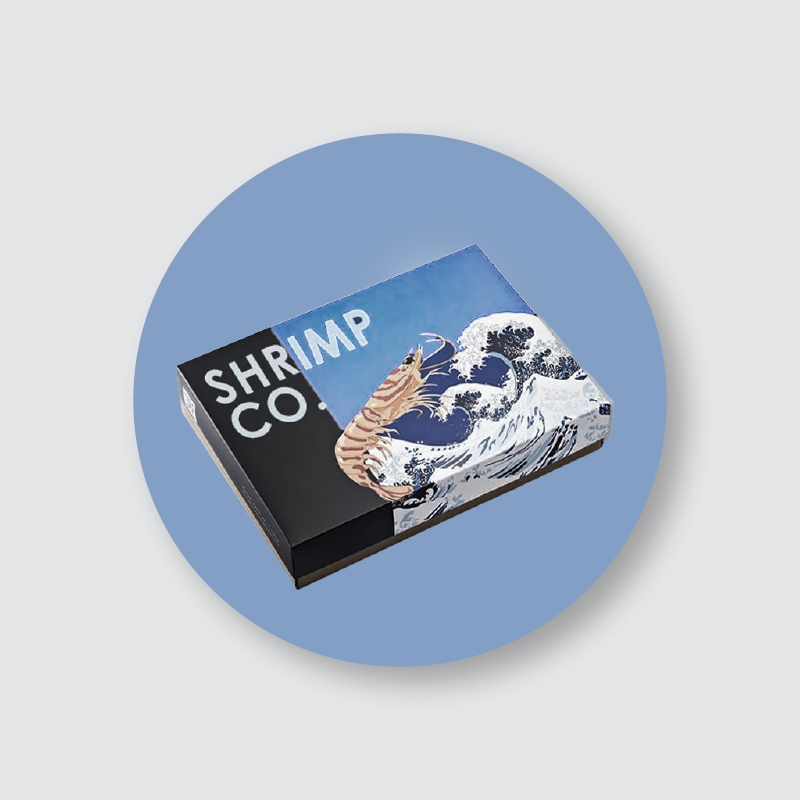
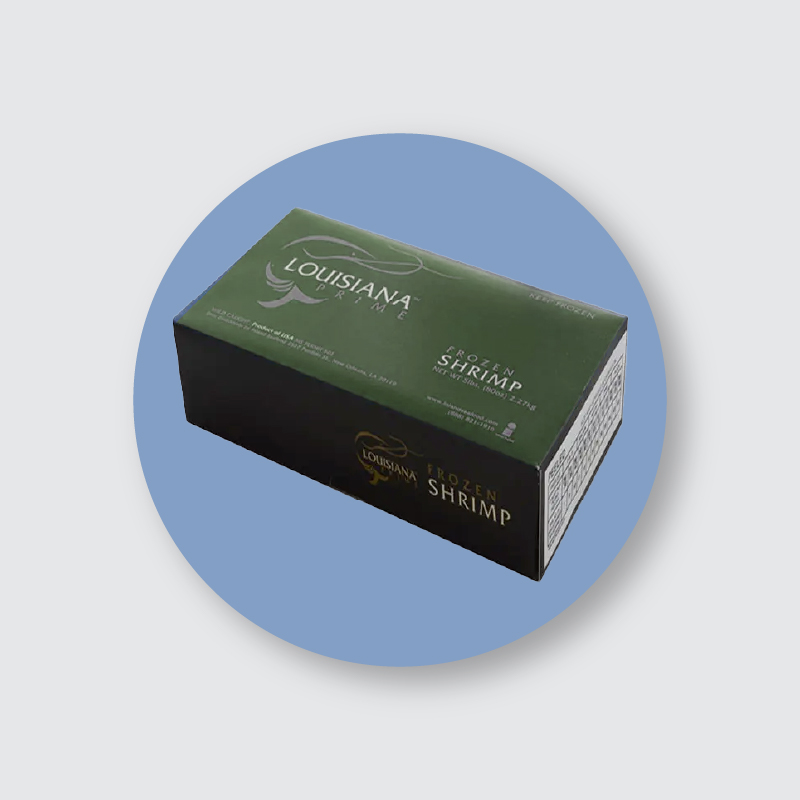
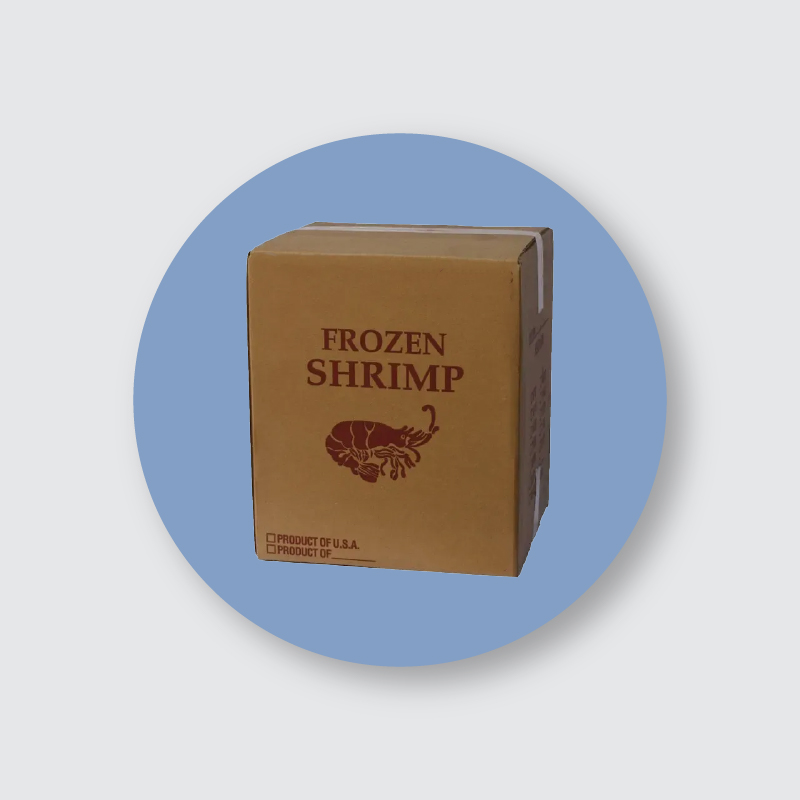
Custom shrimp boxes are made-to-order printed cartons or corrugated outer cases used to organize, identify, display, store, or transport sealed shrimp products. Seafood processors, distributors, food-service suppliers, grocery brands, and exporters can configure these custom food packaging solutions around frozen bags, sealed trays, retail packs, or bulk case quantities.
Important choices include the internal dimensions, packed weight, number of units per case, board construction, printing, finish, closure, and expected exposure to condensation or cold storage. When a package will touch shrimp directly, the exact material, coating, adhesive, ink system, intended use, and supporting documentation must be confirmed before production.
Submit the final packed dimensions, product weight, required quantity, artwork, and storage conditions to receive a configuration-specific recommendation and quote.
Who Uses Custom Shrimp Packaging?
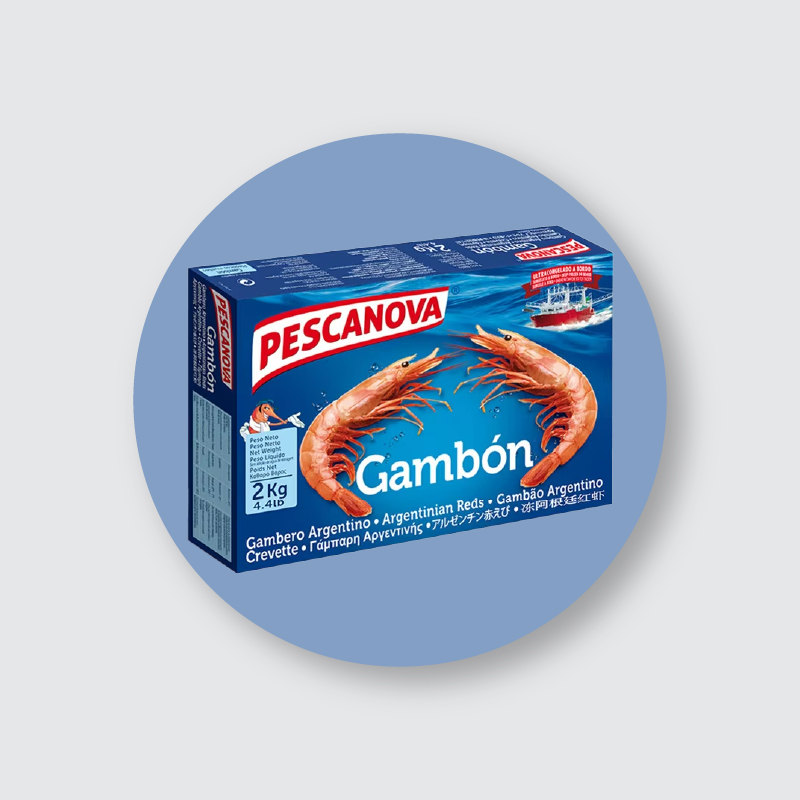
Custom shrimp packaging can support several stages of seafood distribution. Seafood processors may need printed cartons around sealed frozen shrimp bags. Grocery suppliers may require compact retail cartons with clear branding, storage instructions, weight details, barcodes, and traceability panels.
Food-service distributors may need stronger corrugated cases that hold multiple sealed packs. Exporters and wholesale suppliers may require packaging designed around stacked weight, case count, pallet arrangement, handling points, and moisture exposure.
The correct box depends on what already contains the shrimp, how many sealed units will be placed inside, and whether the packaging is intended for retail display, warehouse storage, local delivery, or longer distribution routes.
Choose the Packaging Role Before Choosing the Box
Before selecting a structure or material, determine whether the custom box will be used as primary, secondary, or transport packaging.
- Primary packaging directly touches the shrimp. This use requires documentation for the exact material, coating, adhesive, ink placement, temperature range, intended application, and relevant jurisdiction.
- Secondary packaging holds a sealed tray, pouch, bag, or tub. It provides printed branding, product information, organization, retail presentation, and additional handling protection.
- Transport packaging combines multiple sealed units inside a corrugated outer case for warehouse storage, shipment, distribution, or palletization.
A printed paper carton should not automatically be described as a complete cold-chain or direct-contact solution. Temperature control and food protection depend on the complete packaging system, product preparation, refrigeration process, primary packaging, transit conditions, and handling procedures.
Choose a Structure for the Packed Format
A folding carton can suit a lightweight sealed retail pack when shelf presentation and printed product information are the main priorities. Straight tuck, reverse tuck, auto-lock bottom, tray-and-sleeve, or custom die-cut structures may be considered after the packed dimensions and weight have been reviewed.
Multiple sealed pouches, trays, bags, or tubs may require a corrugated outer case rather than lightweight folding stock. The board grade and case structure should be selected according to the total packed weight, stacking height, storage humidity, hand holes, pallet pattern, and distribution method.
When internal movement could damage seals or distort the retail packs, a fitted partition, insert, or carefully calculated case count may help stabilize the contents. Insert availability and material should be confirmed during quotation.
Materials by Handling Need
Lightweight secondary cartons may use printable paperboard when the sealed primary pack provides the main product and moisture barrier. Paperboard offers a smooth surface for branding and product information, but an appropriate coating or laminate may be needed when condensation and repeated handling are expected.
Corrugated board is generally more suitable for heavier case quantities, stacked storage, wholesale distribution, and shipping. The flute, wall construction, and board strength should be selected according to the packed weight and distribution conditions rather than a universal thickness range.
Kraft-facing board can create a natural visual appearance, but the appearance alone does not establish moisture resistance, direct-food-contact suitability, or recyclability.
Coated or laminated constructions may provide additional surface protection. However, films, windows, adhesives, and mixed-material components can affect recycling outcomes.
Closures, Inserts, and Windows
Tuck closures can suit lightweight retail cartons containing sealed shrimp packs. Auto-lock bottoms may provide faster assembly and additional base support for suitable pack weights.
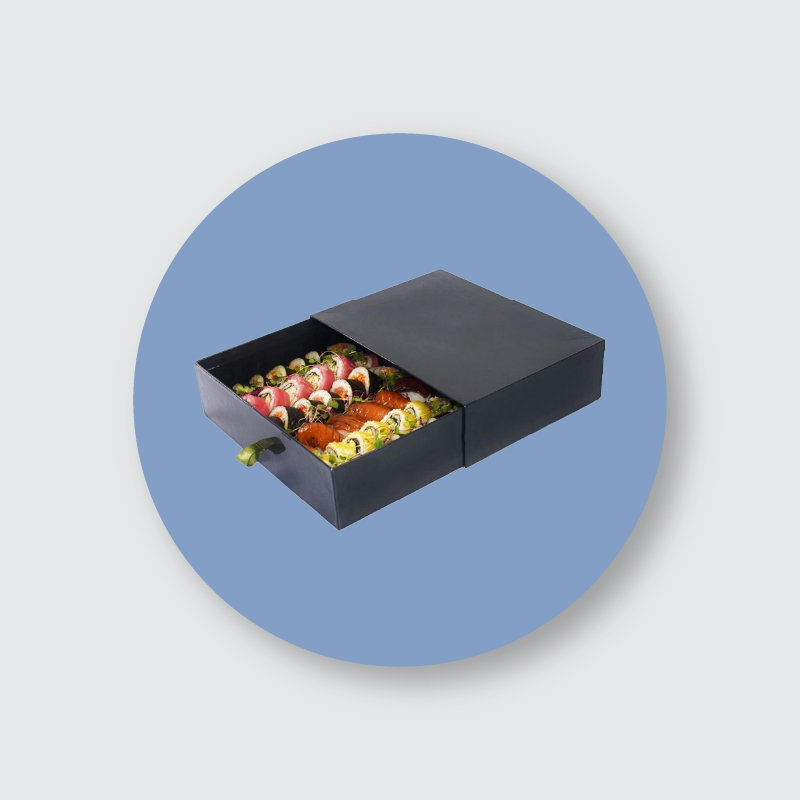
Tray-and-sleeve structures can create a controlled product reveal for premium retail presentation. Corrugated cases can be designed to hold multiple sealed units for storage, wholesale supply, and bulk distribution.
Windows should be used only when product visibility is genuinely helpful and the window does not conflict with condensation exposure, storage conditions, labeling space, structural strength, or recycling priorities. A window is normally more appropriate for displaying a sealed inner pack than exposing unpackaged seafood.
Partitions or fitted inserts may help separate sealed units, reduce internal movement, and keep labels facing consistently. The insert should be designed around the final filled pack rather than an empty container measurement.
Printing and Required Information Panels
Custom printing can include the brand name, product variety, count, net weight, barcode, lot or batch information, storage instructions, preparation guidance, handling symbols, origin statements, and other buyer-supplied information.
CMYK printing can reproduce full-color artwork, illustrations, and product photography. Pantone color matching may be considered when a specific brand color needs to remain consistent. The available printing method will depend on the selected material, order quantity, artwork, color requirements, and structural design.
The buyer is responsible for confirming the legal accuracy, minimum text size, placement, and jurisdictional requirements of nutrition, allergen, origin, storage, handling, and other regulated statements.
Ideal Custom Boxes should produce the packaging according to buyer-approved artwork rather than provide a legal or regulatory compliance conclusion.
Finishing Options and Their Tradeoffs
Matte or gloss lamination can change the appearance and handling feel of a printed shrimp carton, but lamination also adds a film layer to the construction. An aqueous coating may be considered for selected paperboard applications, subject to availability and the required performance.
Spot UV, foil stamping, embossing, and debossing are primarily presentation features. They should be placed away from folds, barcodes, variable-data areas, glue zones, and frequently handled panels where they could affect readability or durability.
A decorative finish should not be presented as a substitute for a tested moisture barrier or cold-storage construction. Share the expected temperature, condensation exposure, storage duration, and handling conditions before selecting a coating or finish.
Sizing and Artwork Guidance
Measure the final filled and sealed shrimp pack rather than only measuring the empty pouch, tray, bag, or tub.
Provide the following information when requesting a quote:
- Packed length, width, and depth
- Filled product weight
- Number of units per carton
- Orientation of each unit
- Required clearance or insert space
- Expected stacking height
- Storage and distribution conditions
- Pallet or master-case requirements
- Barcode and mandatory-information panels
- Total order quantity
- Delivery destination
Artwork should be prepared on the approved dieline. Important text, barcodes, logos, and regulatory information should remain inside the safe area and away from cut lines, folds, glue areas, and closures.
Use our box dimension guide to understand length, width, height, and the difference between internal and external measurements before submitting your specifications.Confirm the required color mode, image resolution, fonts, and accepted artwork file format with the design team before final submission.
Retail, Storage, and Shipping Considerations
Retail shrimp cartons need clear front-panel product identification and enough space for storage instructions, weight information, barcodes, traceability details, and other required product information.
The carton should fit the sealed product closely enough to limit unnecessary movement without placing excessive pressure on seals, lids, or closures.
Food-service and wholesale cases may prioritize pack count, stacked strength, handling efficiency, case labels, and warehouse identification over decorative finishing.
Palletized or longer-distance shipments require confirmation of the case weight, stacking pattern, humidity exposure, pallet arrangement, and carrier handling conditions.
A printed shrimp box does not independently control product temperature. Refrigeration, insulation, coolant, primary packaging, loading practices, transit time, storage procedures, and temperature monitoring must be managed as part of the complete cold-chain system.
Sustainability and Compliance Options
Paperboard, kraft-facing board, recycled-content materials, and reduced-plastic configurations may be available depending on the required structure and project specifications.
Recyclability depends on the selected board, coating, lamination, window film, adhesive, food contamination, and local collection facilities.
Request supporting documentation when a project requires certified fiber, recycled content, direct food contact, temperature performance, or another specific environmental or regulatory property.
The buyer remains responsible for reviewing and approving all labeling, food-contact, storage, environmental, and regulatory requirements applicable to the packaged product and target market.
How the Quote and Proof Process Works
- Submit the final packed dimensions, weight, quantity per carton, total order quantity, storage conditions, preferred structure, printing requirements, finishing needs, and artwork.
- The packaging team reviews the supplied information and recommends a suitable configuration.
- Pricing is prepared according to the approved size, material, structure, printing, finish, quantity, proof requirements, and delivery destination.
- Review the digital proof and dieline carefully. Check the dimensions, text, artwork, barcode placement, colors, folds, glue areas, and required product information.
- Approve the final artwork and complete the required payment step.
- Production begins after artwork approval and payment confirmation.
Standard turnaround is 12 to 14 business days. Express turnaround is 6 to 8 business days. Review our shipping policy for current U.S. delivery procedures, shipping eligibility, and order-related delivery information.
Complex structures, special materials, physical samples, unusually large orders, compliance-document requests, or special delivery requirements should be confirmed in the written quotation.
Request a Quote for Custom Shrimp Boxes
Request a configuration-specific quote for printed retail cartons, sleeves, or corrugated outer cases for sealed shrimp products.
Include the final filled-pack dimensions, product weight, units per carton, total order quantity, storage conditions, artwork, delivery destination, and any material or compliance documentation your project requires.
Ideal Custom Boxes offers Low MOQs, standard turnaround of 12 to 14 business days, and express turnaround of 6 to 8 business days. Final pricing depends on the approved dimensions, structure, material, printing, finishing, quantity, proof requirements, and delivery details.
For help selecting a structure, material, or finishing option, contact our packaging team before submitting your final specifications.Product Specification
Material/Paper Stock Information
Tab Content
Printing Methods
This is the heading
Lorem ipsum dolor sit amet, consectetur adipisc elit.
This is the heading
Lorem ipsum dolor sit amet, consectetur adipisc elit.
This is the heading
Lorem ipsum dolor sit amet, consectetur adipisc elit.
This is the heading
Lorem ipsum dolor sit amet, consectetur adipisc elit.
Inks
Tab Content
Finishing Options
Tab Content